Notion Brand Strategy Template | Complete Brand Building Guide
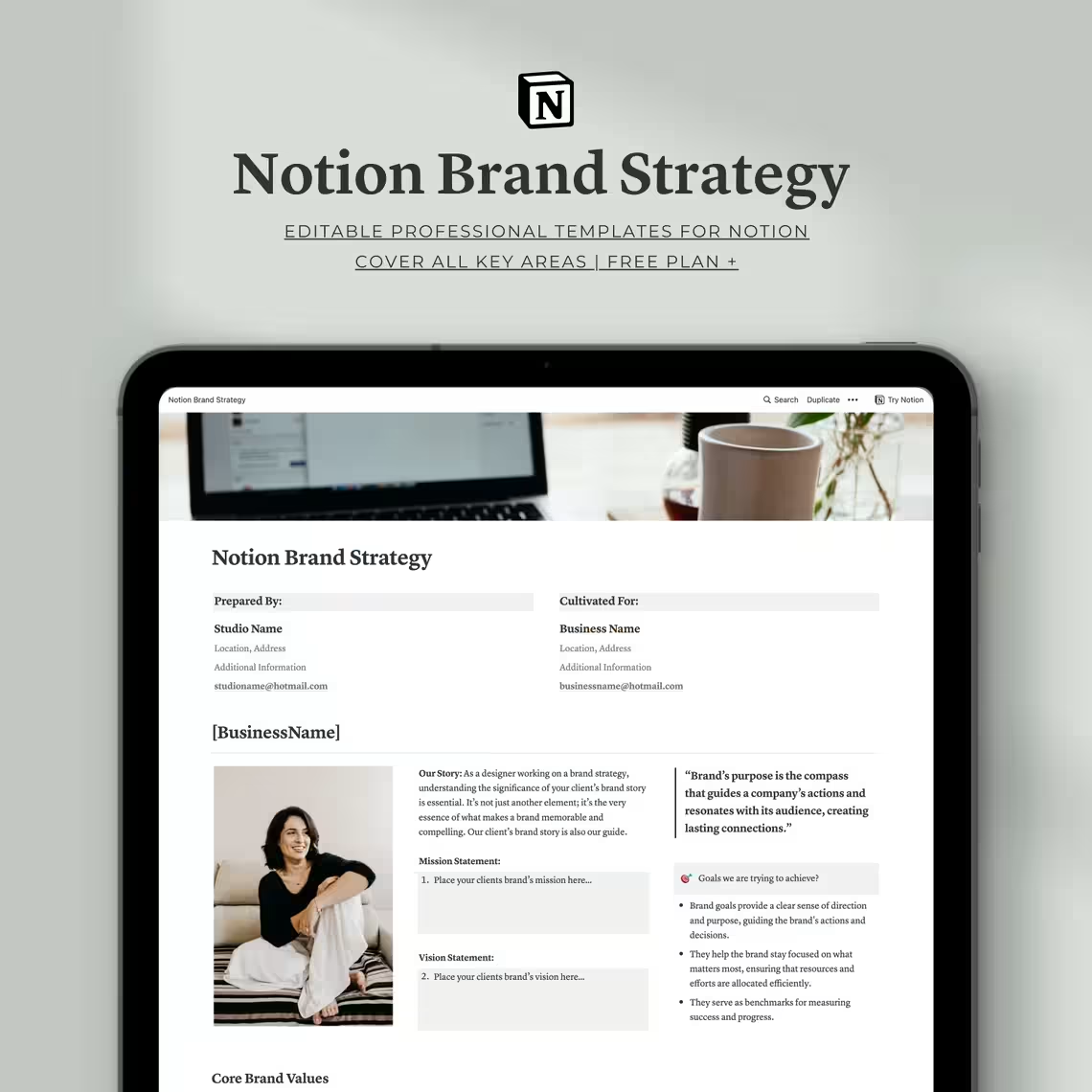
Build a powerful, purposeful brand with this Notion Brand Strategy Template. Covers brand story, mission, values, personas, competitors, voice, colour, typography & more — designed for creative businesses. Works on Notion’s free plan.
Notion Brand Strategy Template | Professional Notion Template | Strategies For Success
Original price was: $14.00.$9.00Current price is: $9.00.
Product Details
🎨 Your Brand Is More Than a Logo — It’s Time to Build the Strategy Behind It
Most creative businesses have a logo. A color palette. Maybe even a font they really like. But without a clear, documented brand strategy behind it all — it’s just decoration.
Real brands — the ones that attract dream clients, command premium prices, and build genuine loyalty — are built on strategy. They know exactly who they are, who they serve, what they stand for, and how they communicate it consistently across every single touchpoint.
That’s exactly what the Notion Brand Strategy Template gives you.
Designed exclusively for creative businesses, this is a complete, beautifully structured brand strategy system inside Notion. It walks you through every critical element of building a powerful brand — from your origin story and core values all the way through to your visual identity, ideal client profiles, and competitive positioning.
Whether you’re building your own brand from scratch, refreshing an existing identity, or developing brand strategy for a client — this template gives you the framework to do it with clarity, depth, and confidence.
Stop guessing. Start strategizing. Build a brand that truly means something.
🌟 PERFECT FOR
- Freelance brand designers and graphic designers
- Branding and creative agencies
- Brand strategists and creative consultants
- Startups and small businesses building their brand for the first time
- Established creative businesses refreshing or repositioning their brand
- Marketing professionals managing brand development
- Creative directors building brand strategy frameworks for clients
- Any creative business that wants to build a brand with genuine depth and strategic purpose
💡 WHY THIS TEMPLATE STANDS OUT
✅ Designed exclusively for creative businesses — not a generic business template but a purpose-built creative brand strategy system
✅ Covers every dimension of brand strategy — story, values, audience, competitors, voice, visual identity, and execution
✅ Includes instructions & guidance — built-in direction so you always know how to use every section effectively
✅ Collaboration-friendly — work seamlessly with your team or clients directly inside Notion
✅ Works on Notion’s FREE plan — no paid subscription required
✅ Fully customizable — adapt every section to your unique brand, clients, and creative process
✅ Accessible on any device — desktop, tablet, or mobile via the Notion app
✅ Saves hours of work — skip building from scratch and start with a professionally structured framework
✅ One-time purchase, lifetime access — use it on every brand project forever
🗂️ WHAT’S INCLUDED: 12 ESSENTIAL SECTIONS
📖 Section 1: Story, Purpose & Goals
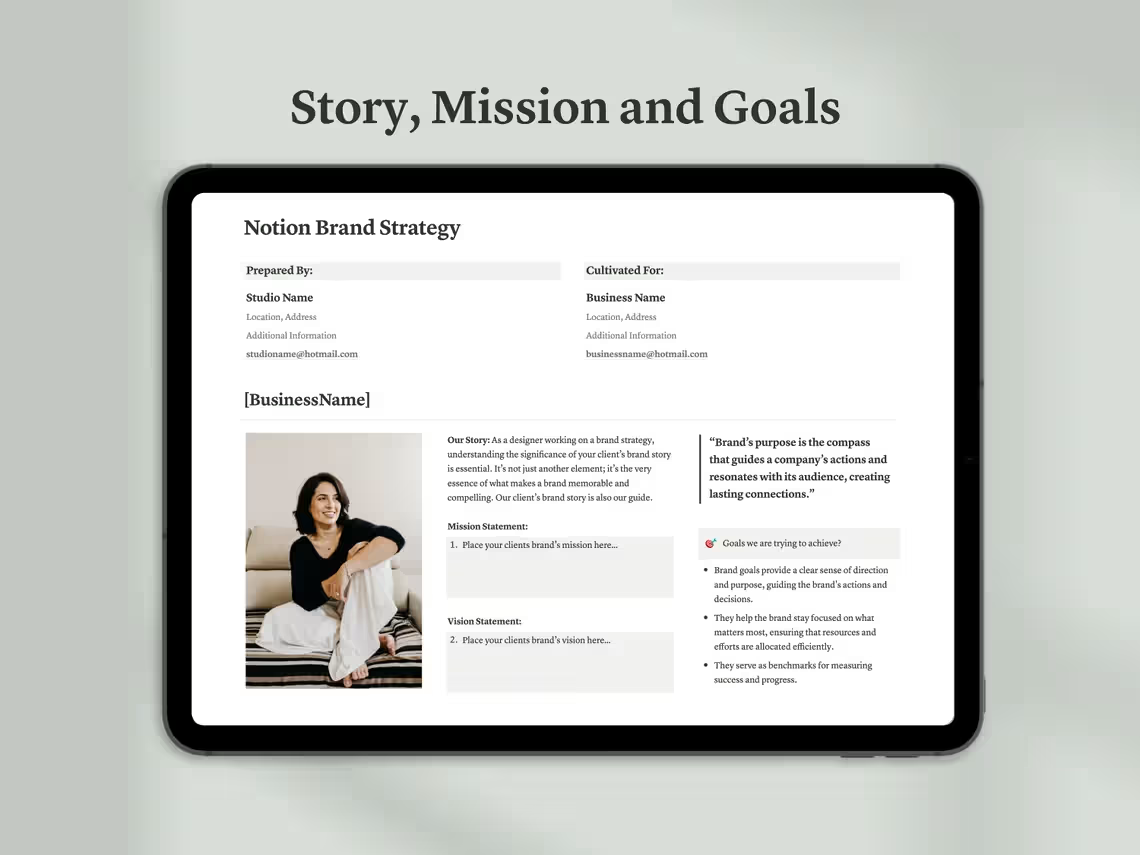
Every powerful brand starts with a compelling story and a clear sense of purpose. This section is where you lay the strategic foundation that every other brand decision will be built upon — capturing the why behind everything your brand does.
Inside you’ll find:
- Brand Origin Story — How did this brand come to be? What inspired its creation? What problem was it born to solve? A well-crafted origin story builds emotional connection and makes your brand instantly more human and relatable
- Brand Purpose — Beyond profit, what is the deeper reason this brand exists? What change does it create in the world? What would be lost if this brand ceased to exist?
- Short-Term Goals — Specific, measurable objectives for the next 3–12 months that the brand strategy needs to support
- Long-Term Goals — The bigger vision for where the brand is heading over the next 3–5 years
- Strategic Objectives — The key business and marketing objectives that the brand strategy is designed to achieve
- Success Metrics — How will you measure whether the brand strategy is working? What does success look and feel like?
- Brand Positioning Statement — A concise, powerful statement that defines exactly where the brand sits in the market and why it matters
This section transforms a brand from a visual identity into a purposeful, strategic force.
🎯 Section 2: Mission & Vision Statement
Two of the most powerful documents a brand can have — and two of the most commonly written badly. This section gives you a structured framework for crafting mission and vision statements that are genuinely meaningful, strategically sound, and inspiring to everyone who reads them.
Inside you’ll find:
- Mission Statement Framework — A step-by-step guide to crafting a mission statement that clearly articulates what the brand does, who it serves, and how it does it differently
- Vision Statement Framework — A structured approach to writing a vision statement that paints a compelling picture of where the brand is heading and the future it’s working to create
- Mission vs Vision Clarity — Clear guidance on the difference between the two and why both are essential for a complete brand strategy
- Statement Refinement Tools — Questions and prompts to test whether your statements are truly powerful or just corporate-sounding filler
- Examples & Inspiration — Reference points to help spark ideas and set a high standard for what great mission and vision statements look like
- Internal vs External Usage — Guidance on how to use these statements internally with your team and externally with your audience
Words that define your brand — crafted with intention and purpose.
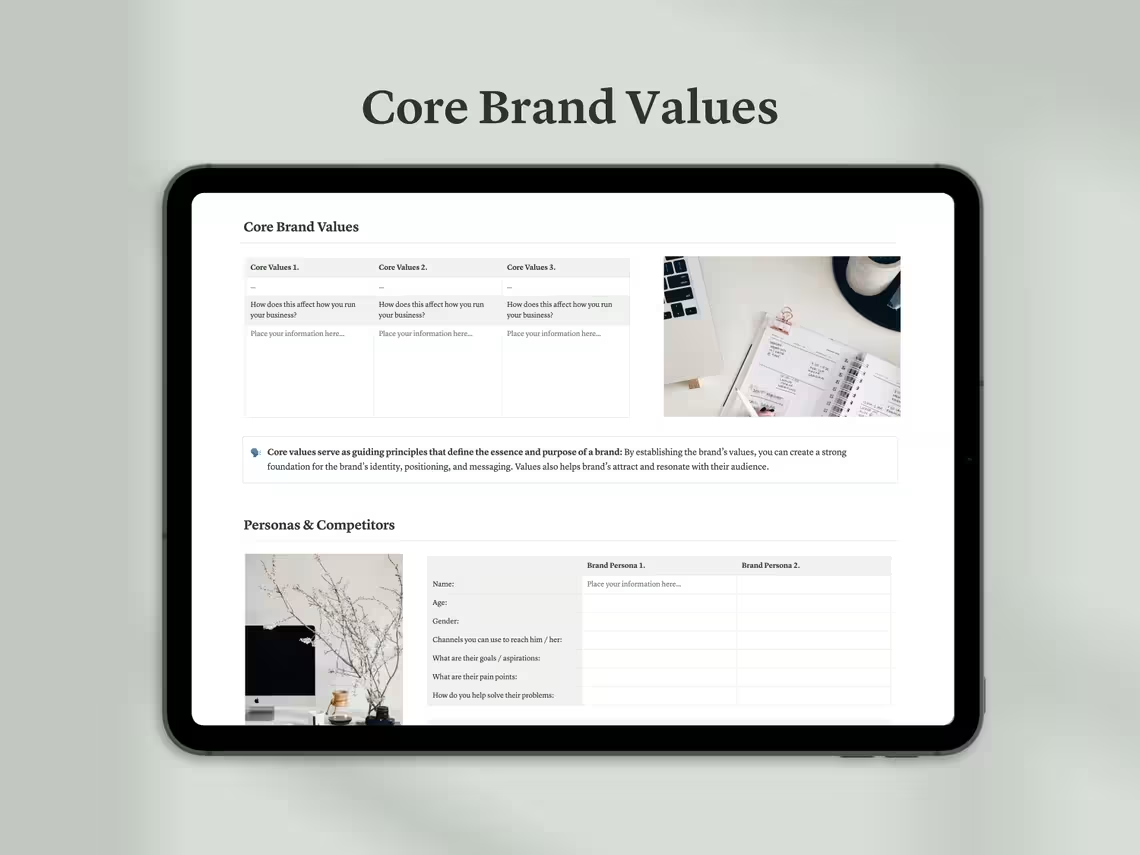
💎 Section 3: Core Brand Values
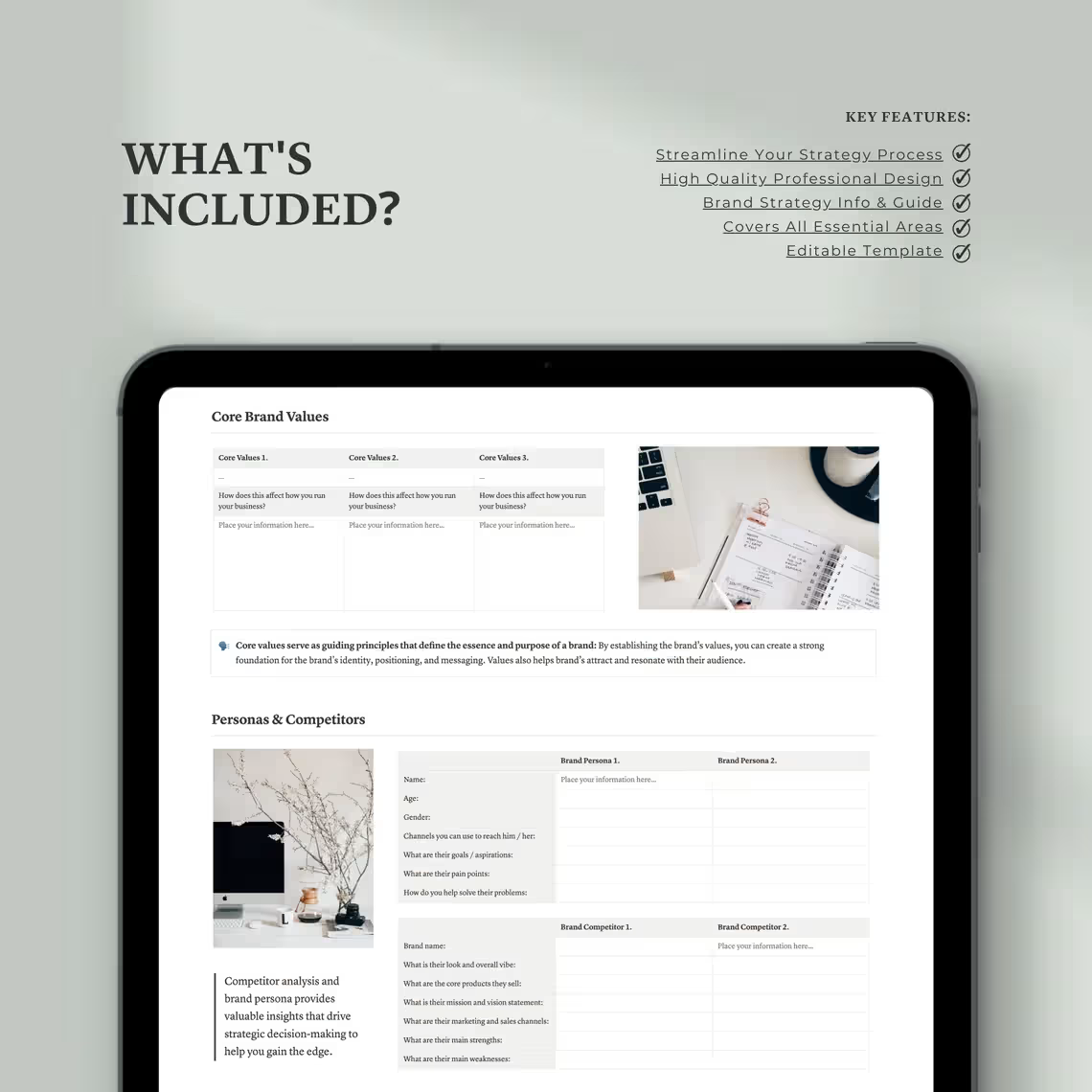
Your brand values are the non-negotiable principles that guide every decision your business makes — from the clients you take on to the way you communicate to the creative choices you make. This section helps you define them with depth and clarity.
Inside you’ll find:
- Values Discovery Framework — A structured process for identifying the values that genuinely drive your brand versus the ones that just sound good on paper
- Core Values Definition — Document each core value with a clear name, a meaningful description, and real examples of how it shows up in your brand behavior
- Values in Action — For each value, define specifically how it influences your creative work, client relationships, communication, and business decisions
- Values Hierarchy — When values come into conflict, which ones take priority? Define your hierarchy for complete strategic clarity
- Team Values Alignment — For agencies and teams, a framework for ensuring everyone understands and embodies the brand values consistently
- Values Communication Guide — How to authentically communicate your values to clients and your audience without sounding hollow or performative
- Values Review Process — A structured approach to periodically reviewing and evolving your values as your brand grows and matures
Values aren’t just wall art — they’re the backbone of every brand decision you make.
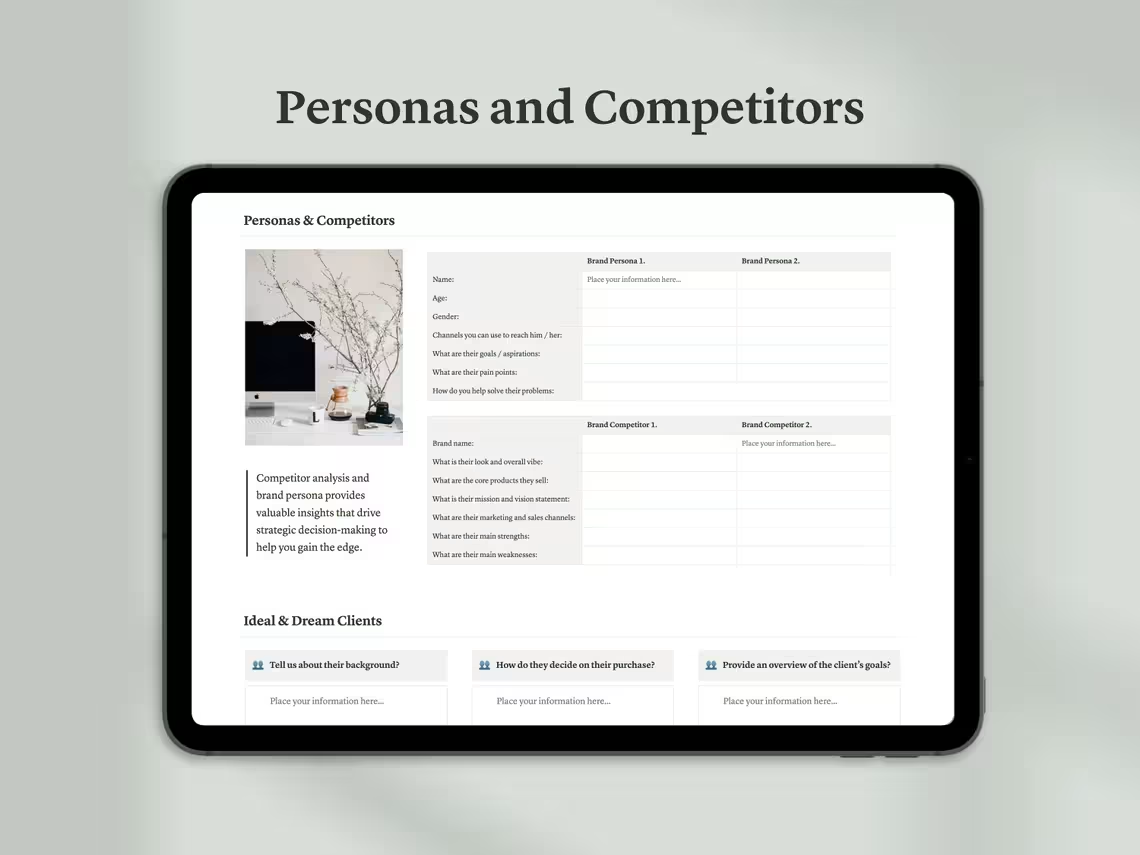
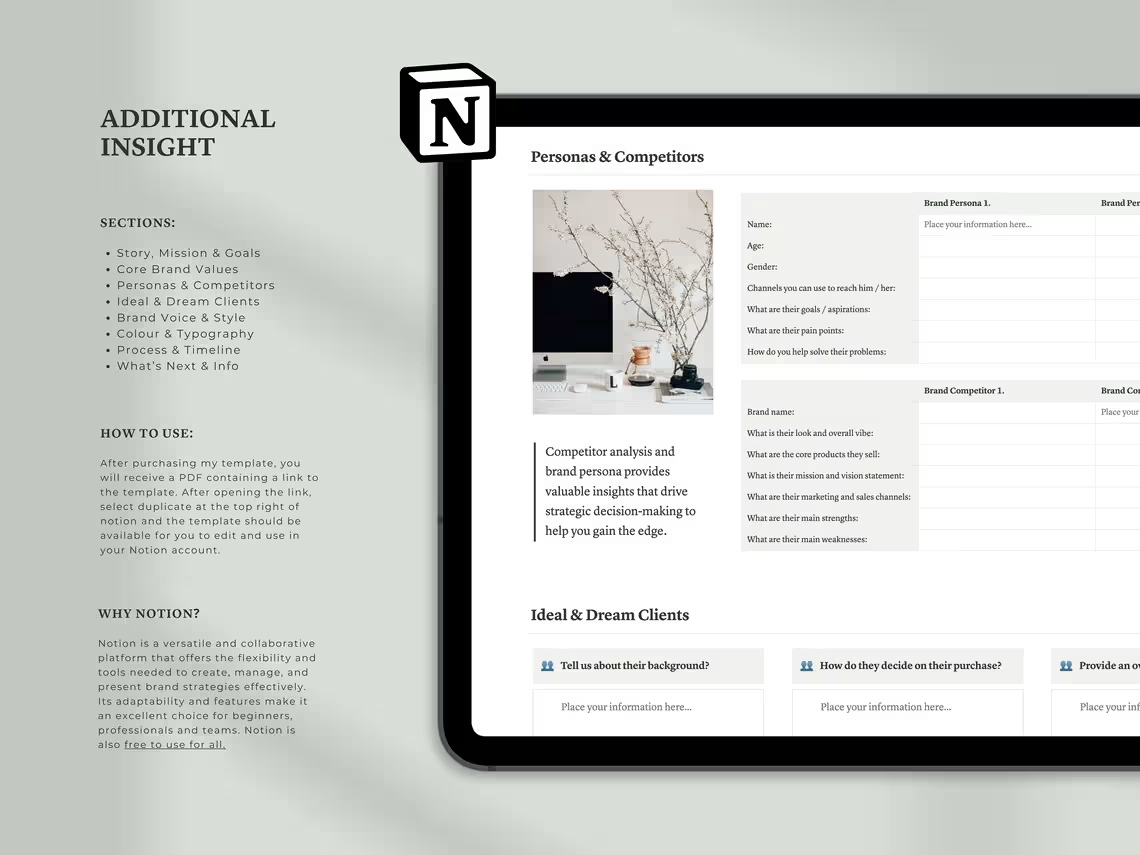
👥 Section 4: Personas & Competitors
You can’t build a brand that resonates without deeply understanding who you’re talking to and who you’re competing against. This section gives you a comprehensive framework for building detailed audience personas and conducting thorough competitive analysis.
Inside you’ll find:
Audience Personas:
- Primary Persona Profile — A detailed, research-based profile of your most important target audience segment including demographics, psychographics, behaviors, and preferences
- Secondary Persona Profile — A supporting audience segment that represents an important but secondary customer group
- Persona Pain Points — The specific frustrations, challenges, and problems each persona faces that your brand addresses
- Persona Aspirations — What each persona deeply wants to achieve, feel, or become — the emotional drivers behind their decisions
- Persona Journey Map — How each persona discovers, engages with, and makes decisions about brands like yours
- Persona Communication Preferences — How each persona prefers to receive information and what messaging resonates most deeply
Competitive Analysis:
- Direct Competitor Profiles — In-depth analysis of your most direct competitors including their positioning, strengths, weaknesses, and visual identity
- Indirect Competitor Profiles — Alternative solutions your audience might consider and why they might choose them
- Competitive Positioning Map — A visual framework for understanding where your brand sits relative to competitors across key dimensions
- Market Gaps & Opportunities — Specific gaps in the competitive landscape that your brand is uniquely positioned to fill
- Competitive Differentiation Strategy — A clear, evidence-based articulation of why your brand is meaningfully different and better
Know your audience. Know your competition. Build a brand that wins.
⭐ Section 5: Ideal & Dream Clients
Not all clients are created equal. The most successful creative businesses don’t just work with anyone — they attract and serve specific types of clients who are the perfect fit for their work, their values, and their vision. This section helps you define exactly who those clients are.
Inside you’ll find:
- Ideal Client Profile — A detailed description of your perfect everyday client — the type of business, industry, stage, budget, and mindset that makes for a smooth, rewarding project
- Dream Client Profile — Your absolute dream client — the brands, businesses, or individuals you would do almost anything to work with
- Ideal Client Pain Points — The specific challenges your ideal clients face that make them actively seek out someone with your exact skills and approach
- Ideal Client Goals — What your ideal clients are trying to achieve and how your work directly helps them get there
- Ideal Client Values — The principles and priorities that your ideal clients hold — and how they align with your own brand values
- Red Flag Client Profile — Just as important — the types of clients that are NOT a good fit, so you can recognize and avoid them early
- Client Attraction Strategy — How to position your brand, portfolio, and messaging to naturally attract more ideal clients and fewer wrong-fit ones
- Dream Client Outreach Plan — A structured approach for proactively pursuing your absolute dream clients with confidence and professionalism
When you know exactly who you want to work with — you build a brand that magnetically attracts them.
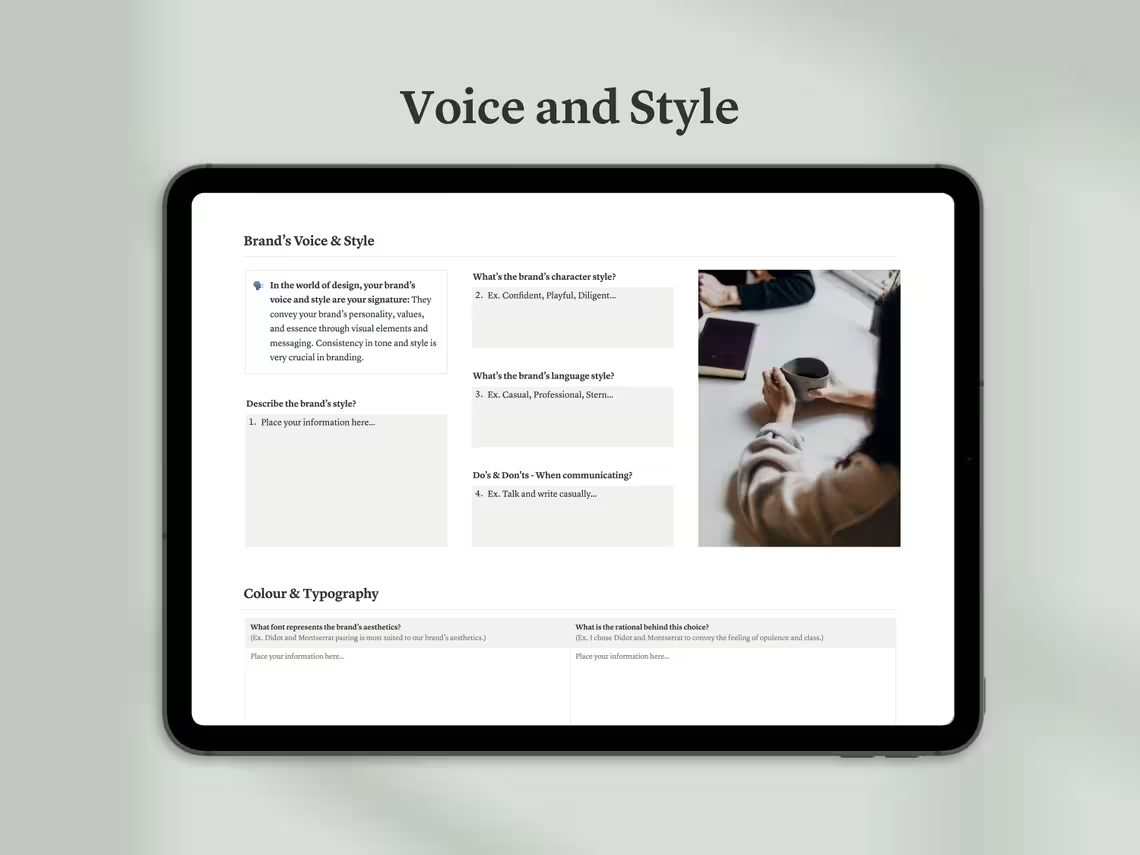
🗣️ Section 6: Brand Voice & Style
How your brand communicates is just as important as how it looks. The Brand Voice & Style section defines the complete verbal identity of your brand — ensuring every piece of written communication feels consistent, authentic, and unmistakably on-brand.
Inside you’ll find:
- Brand Voice Definition — The overarching personality and character of how your brand communicates — bold, warm, witty, authoritative, playful, sophisticated?
- Tone of Voice Guidelines — How the brand’s voice adapts across different contexts — social media, client emails, proposals, website copy, and marketing materials
- Brand Vocabulary — Specific words, phrases, and expressions that feel on-brand — and a list of words and phrases to actively avoid
- Communication Style Rules — Sentence length, punctuation preferences, use of humor, level of formality, and other stylistic guidelines
- Brand Storytelling Framework — How to consistently tell the brand’s story across different formats and platforms
- Copy Examples — Real examples of on-brand copy across key communication touchpoints to serve as reference and inspiration
- Voice vs Tone Distinction — Clear guidance on the difference between consistent voice and adaptive tone, and how to apply both
- Social Media Voice Guide — Platform-specific communication guidelines for Instagram, LinkedIn, Twitter, and beyond
A consistent brand voice builds recognition, trust, and a deeper connection with your audience.
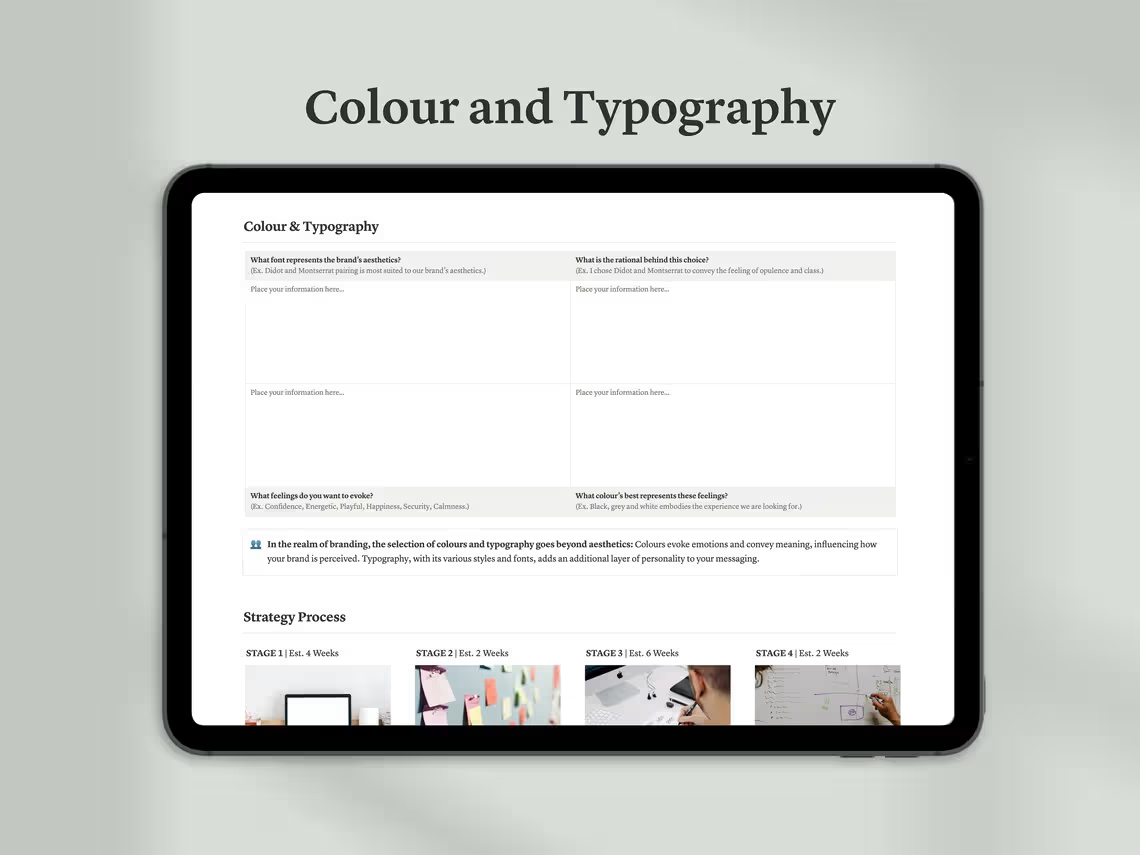
🎨 Section 7: Colour & Typography
Visual consistency is one of the most powerful tools in your brand arsenal. The Colour & Typography section gives you a complete framework for defining, documenting, and applying your brand’s visual language with precision and purpose.
Inside you’ll find:
Colour System:
- Primary Colour Palette — Your main brand colours with exact HEX, RGB, and CMYK codes for perfect consistency across every medium
- Secondary Colour Palette — Supporting colours that complement the primary palette and add visual flexibility
- Accent & Highlight Colours — Bold, attention-grabbing colours for calls to action, highlights, and visual emphasis
- Neutral Colour Palette — Background, text, and base colours that provide balance and breathing room
- Colour Psychology Notes — The emotional associations and strategic reasoning behind each colour choice
- Colour Usage Proportions — Guidelines on how much of each colour to use across brand communications
- Colour Accessibility Standards — Contrast ratio guidelines to ensure your colours are accessible to all audiences
- Colour Don’ts — Common colour combination mistakes to avoid for your specific palette
Typography System:
- Primary Typeface — Your main brand font with full specifications including weights, sizes, and primary use cases
- Secondary Typeface — Your supporting font for body copy, captions, and secondary communications
- Heading Hierarchy — Defined H1 through H4 styles with exact sizes, weights, line heights, and spacing
- Body Copy Specifications — Font size, line height, paragraph spacing, and column width for optimal readability
- Font Pairing Guidelines — How to combine your typefaces harmoniously across different layouts and applications
- Web Font Alternatives — System font fallbacks for digital applications where brand fonts may not load
- Typography Don’ts — Common typographic mistakes that undermine brand consistency
Your visual language, locked in and consistent — across every platform, every medium, every time.
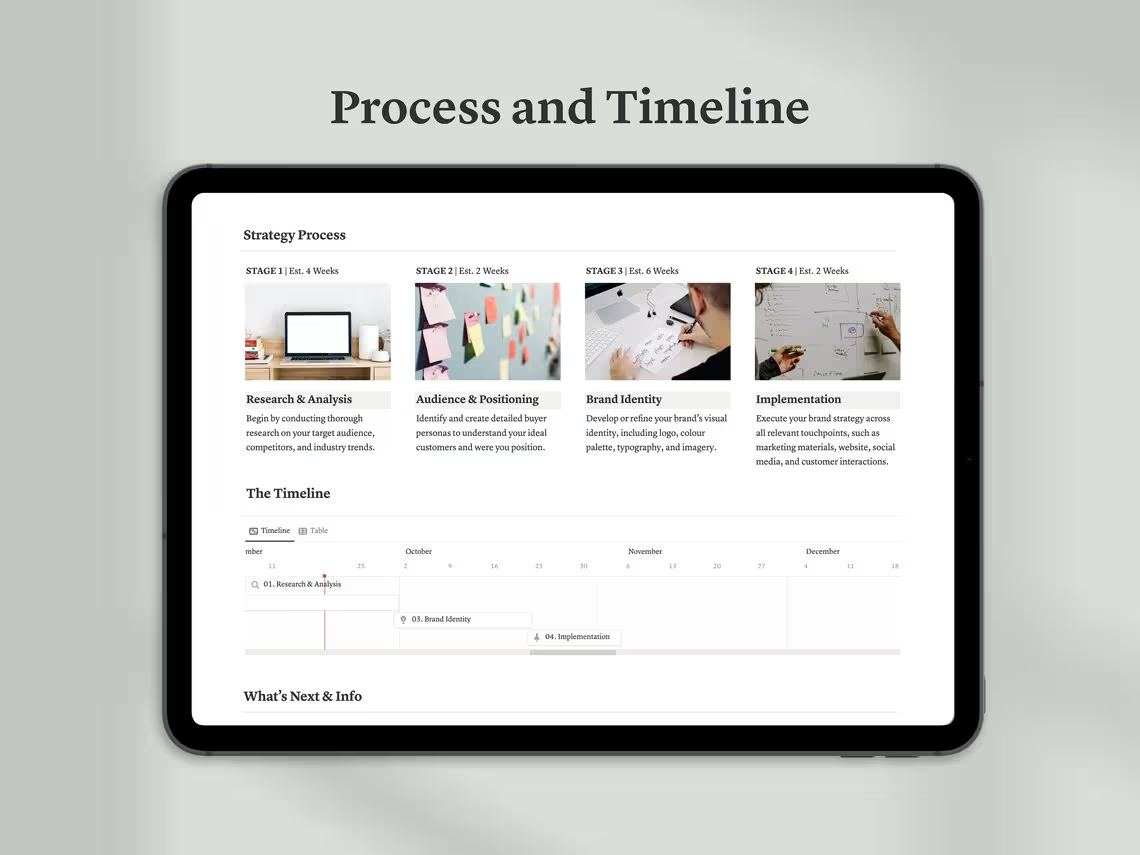
⏱️ Section 8: Process & Timeline
A great brand strategy is only as good as its execution. The Process & Timeline section gives you a structured roadmap for implementing your brand strategy — turning strategic decisions into a clear, actionable plan with defined phases, tasks, and deadlines.
Inside you’ll find:
- Strategy Implementation Phases — Break the brand rollout into clear, logical phases from internal alignment to public launch
- Task Breakdown per Phase — Detailed task lists for each phase so every action item is captured and assigned
- Key Milestone Dates — Critical checkpoints that mark meaningful progress in the brand implementation journey
- Responsibility Matrix — Who is responsible for what, and by when — essential for agencies and teams
- Review & Approval Checkpoints — Scheduled moments for stakeholder review to ensure alignment at every stage
- Brand Launch Planning — A structured framework for planning and executing a compelling brand launch
- Progress Tracking Dashboard — Visual progress indicators so you always know exactly where the implementation stands
- Contingency Planning — Buffer time and backup plans for the inevitable unexpected delays and challenges
Turn your brand strategy from a document into a living, breathing action plan.
🚀 Section 9: What’s Next?
Completing your brand strategy is a milestone — but it’s just the beginning. This section maps out the clear path forward, ensuring momentum is maintained and the strategy translates seamlessly into real-world brand building.
Inside you’ll find:
- Immediate Next Actions — The first 3–5 things that need to happen the moment the strategy is complete
- 30/60/90 Day Action Plan — A structured short-term roadmap for bringing the brand strategy to life quickly and consistently
- Brand Rollout Checklist — Every touchpoint, platform, and asset that needs to be updated as part of the brand implementation
- Team Communication Plan — How to share the new brand strategy with your team and ensure everyone is aligned and inspired
- Client Communication Strategy — How and when to communicate brand changes to existing clients and the wider audience
- Ongoing Brand Management — A framework for maintaining brand consistency and evolving the strategy over time
- Brand Health Review Schedule — Regular check-ins to assess how well the brand strategy is performing and where adjustments are needed
A great strategy without clear next steps is just a document. This section makes sure it becomes reality.
📦 WHAT YOU’LL RECEIVE
Upon purchase you will receive 1 PDF file containing a direct link to your Notion template. Open the link, click Duplicate in the top right corner of Notion, and the full brand strategy template will be saved instantly to your workspace — ready to use immediately.
📌 This is a digital product. No physical item will be shipped. All sales are final.
🙋 FREQUENTLY ASKED QUESTIONS
Do I need a paid Notion account? No! This template is fully compatible with Notion’s free plan.
Is this for building my own brand or my clients’ brands? Both. This template works perfectly for developing your own creative business brand strategy or for delivering brand strategy as a service to clients.
Can I collaborate with my team inside the template? Yes. Notion’s built-in collaboration features allow you to share and work on the template with team members in real time.
Can I customize it for different types of creative businesses? Absolutely. The template is fully editable and flexible enough to work for design studios, photography businesses, agencies, consultants, and any other creative enterprise.
Is this a one-time purchase? Yes. Pay once and use it forever across unlimited brand projects.
A beautiful brand without strategy is just art. Build the strategy — then let the design bring it to life.
✨ Add to cart and start building a brand that truly means something today.
Related products
-
Sale!
Notion Project Framework Hub | Complete Branding Workflow
Original price was: $10.00.$7.00Current price is: $7.00. -
Sale!
Notion Creative Direction Template | Complete Creative Project Planner
Original price was: $14.00.$7.00Current price is: $7.00. -
Sale!
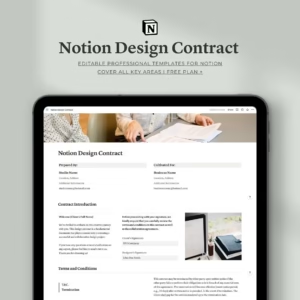
Notion Design Contract Template For Professionals
Original price was: $10.00.$5.00Current price is: $5.00. -
Sale!
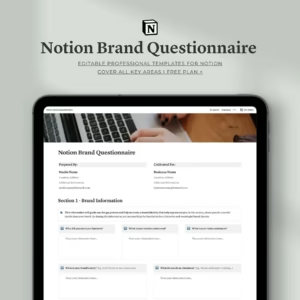
Notion Brand Questionnaire Template | Complete Brand Discovery Tools
Original price was: $10.00.$6.00Current price is: $6.00. -
Sale!
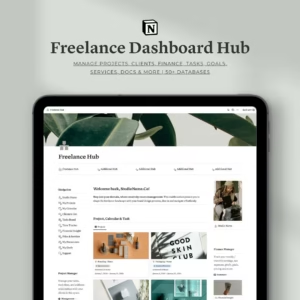
Notion Freelance Dashboard Hub | All-in-One Business Management Template
Original price was: $23.00.$9.00Current price is: $9.00. -
Sale!
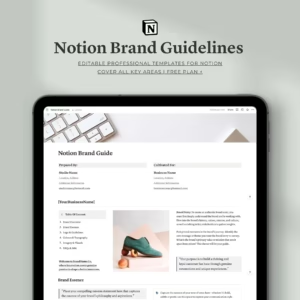
Notion Brand Guidelines Template | Complete Brand Identity Guide
Original price was: $14.00.$7.00Current price is: $7.00. -
Sale!
The Ultimate Notion Brand Presentation Template — Build. Present. Impress.
Original price was: $14.00.$7.00Current price is: $7.00.
Reviews